
As a homeowner, you may have previously received an escrow analysis from your mortgage lender. Whether or not you’re familiar with what it entails, the information provided on this statement can be difficult to interpret at times. This guide explains what an escrow analysis is, what it means to have a shortage or surplus and how to read the statement.
What is an escrow account and analysis?
An escrow account is used by homeowners and mortgage lenders to ensure timely and adequate payments are made on homeowners’ insurance and real estate taxes.
How escrow accounts work: Money is taken from your monthly mortgage payments and put aside into an escrow. Your lender can access this directly to pay insurance and taxes when they’re due.
Because your property tax and home insurance rate can change over time, so can your monthly escrow payment. Your mortgage lender will conduct an annual review of your account for current tax and insurance payments, your account balance, and any recent tax and insurance disbursements they have made with your escrowed funds. Your lender will send a statement that notes whether your monthly payment will go up, down or remain the same next year, and any shortages or surpluses in your account.
What does a shortage or surplus mean?
- Shortage – Occurs when the lowest projected balance in the year ahead is less than your minimum required balance. This means your tax and insurance payments have increased, and may spread the funds over the next 12 payments
- Surplus – Occurs when your lowest projected balance is more than your minimum required balance. The surplus funds may either be applied to future payments or sent in the form of a check.
How to read your escrow analysis statement
With an escrow account, you will receive an annual analysis statement from your lender. These statements may look different among loan servicing companies, but here’s an example and general breakdown of each page:
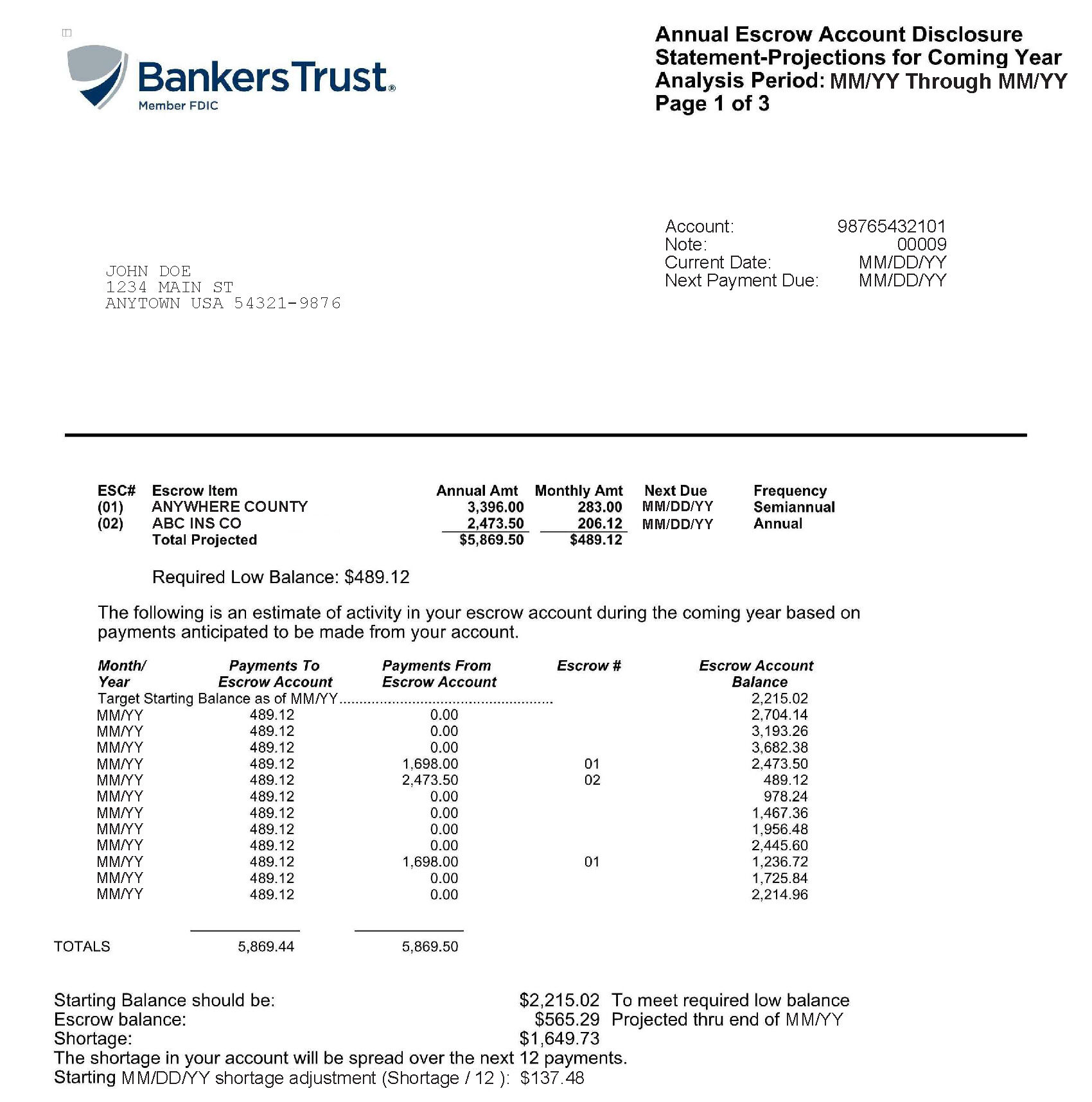
Page one: Escrow projected summary
This table lists the expected account deposits and withdrawals for each month in the upcoming year. Your starting balance and required balance are compared to determine a shortage or surplus after payments are made. If there is a shortage or surplus, the section below will contain information about options to pay the shortage or receive surplus funds.
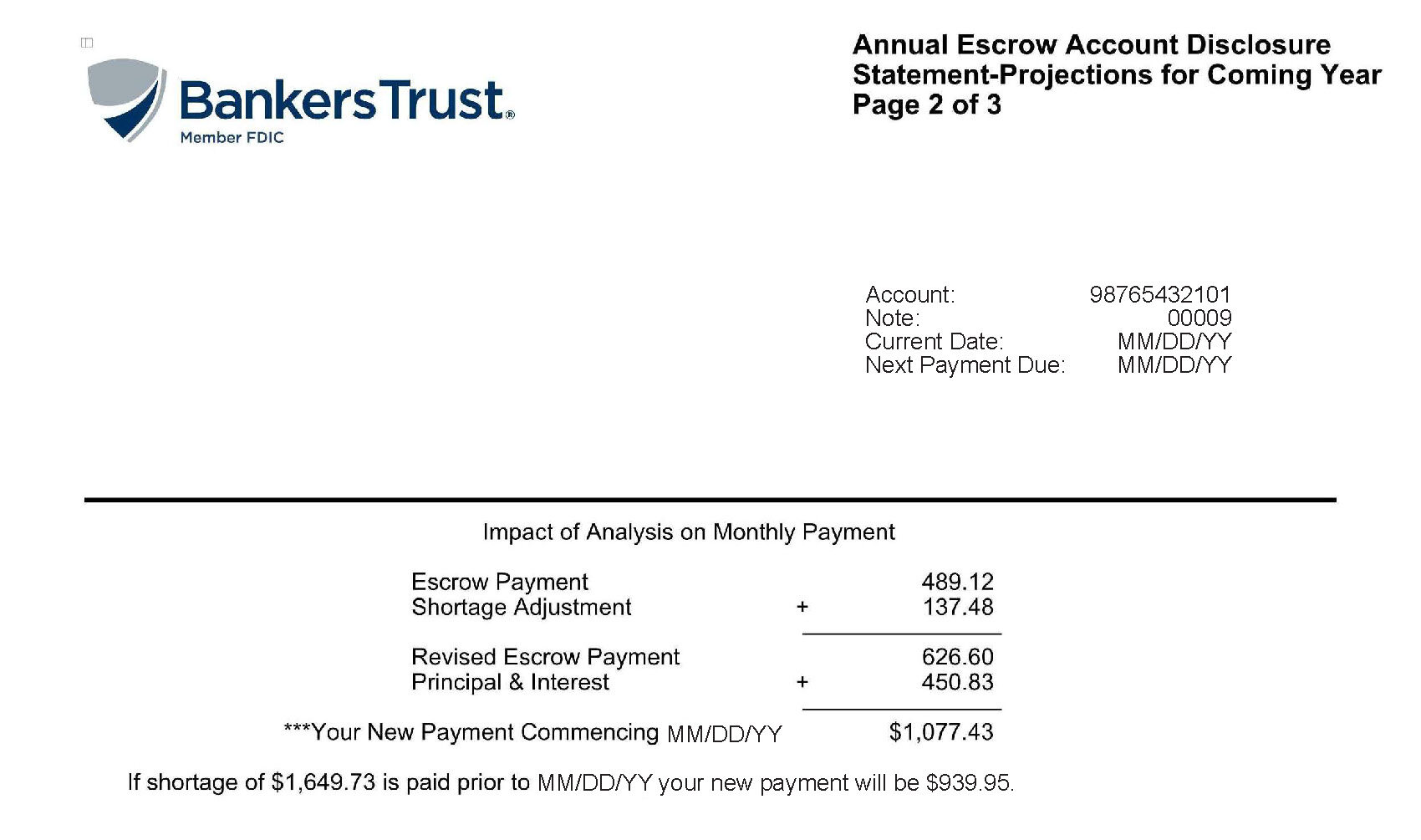
Page two: Monthly payment change
Based on new calculations of home insurance and tax, your monthly payment may change. On this page, you will find a breakdown of these changes, as well as the new expected payment.
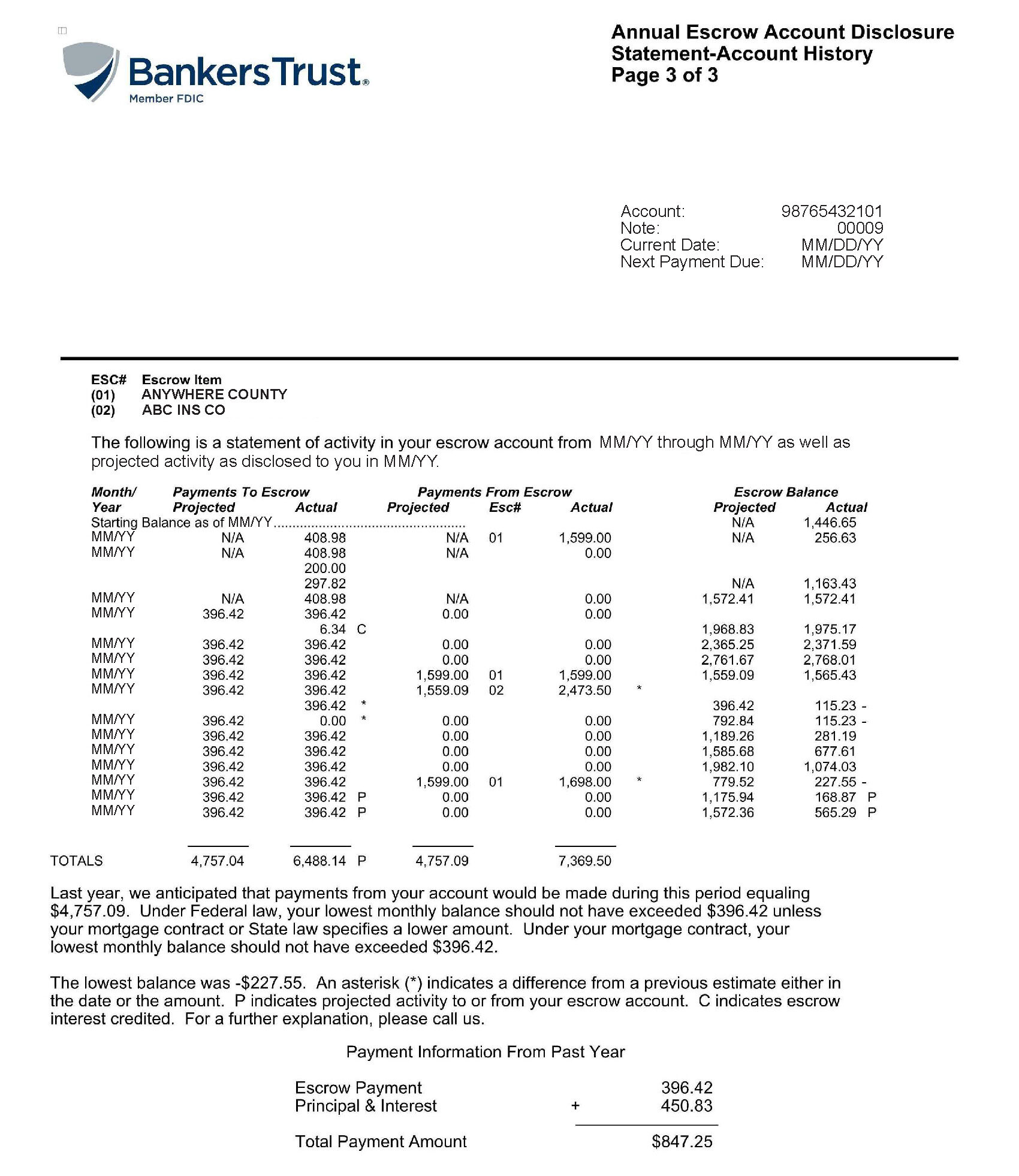
Page three: Escrow activity summary for prior year
If you have maintained an escrow account for more than one year, the final page of your statement will be a summary of all account activity for the past 12 months. Review and confirm its accuracy and contact your lender if any payments appear off.
Understanding your escrow analysis and statement allows you to track where funds are going and prepare for changes in your monthly mortgage payments.
Speak with your lender today if you have any questions about an escrow analysis.